
Local History
Local History
A Short History Of Local Habitation

Detail from “A Sketch of the Coast from Darling Harbour to Elizabeth Bay: showing the grants to Mr Macleay and six other gentlemen…16th July, 1832. S. Arrowsmith, lithog.”
Pre European settlement
Before European settlement, what is now known as Central Sydney was part of Eora Country. The Eora Nation consisted of roughly 29 clan groups. A central base of the Cadical (or Gadigal) clan was in the vicinity of present-day Potts Point, the clan’s territory stretching from the southern side of Port Jackson to what is now known as Petersham.
The Indigenous Inhabitants Interaction with Governor Macquarie
In 1820 Governor Macquarie established a farm and village for several dozen Aboriginal people of the ‘Sydney tribe’ at Elizabeth Bay / Gurrajin, which became known as Elizabeth Town, (named after Macquarie’s wife). Aboriginal people were already living at Elizabeth Bay / Gurrajin before Macquarie established the village. Writers at the time acknowledged that it was ‘a place much frequented and delighted in by the Sydney blacks, to a family of whom indeed it belonged’, as a number of historically documented burials in the area also shows. The Aboriginal people using the Gurrajin area were probably part of the same group that were known to frequent the nearby Woolloomooloo area in the early 19th century.
A monumental day was the 28th March,1820 when Macquarie and his family and ‘three boats full of the natives’ rowed to Elizabeth Bay / Gurrajin to select the location of the village. The site they chose was behind the sandy beach of the bay, in present-day Beare Park, Elizabeth Bay. As local resident Obed West later described, ‘bark huts were erected about the bay for their use, and two assigned men appointed to look after the settlement.’ Residents were also given a fishing boat, tackle, salt, and casks to preserve their catch.
A number of Aboriginal people came to live there over the next few years, including well-known Sydney identities, Thomas Tamara and Mahroot. The idea of a settled farming life, however, had little appeal to Aboriginal people, who could still feed themselves by fishing in the many bays of the harbour. After Macquarie returned to England in 1822, Aboriginal people used the village less and less, and by late 1824 it had been completely abandoned.
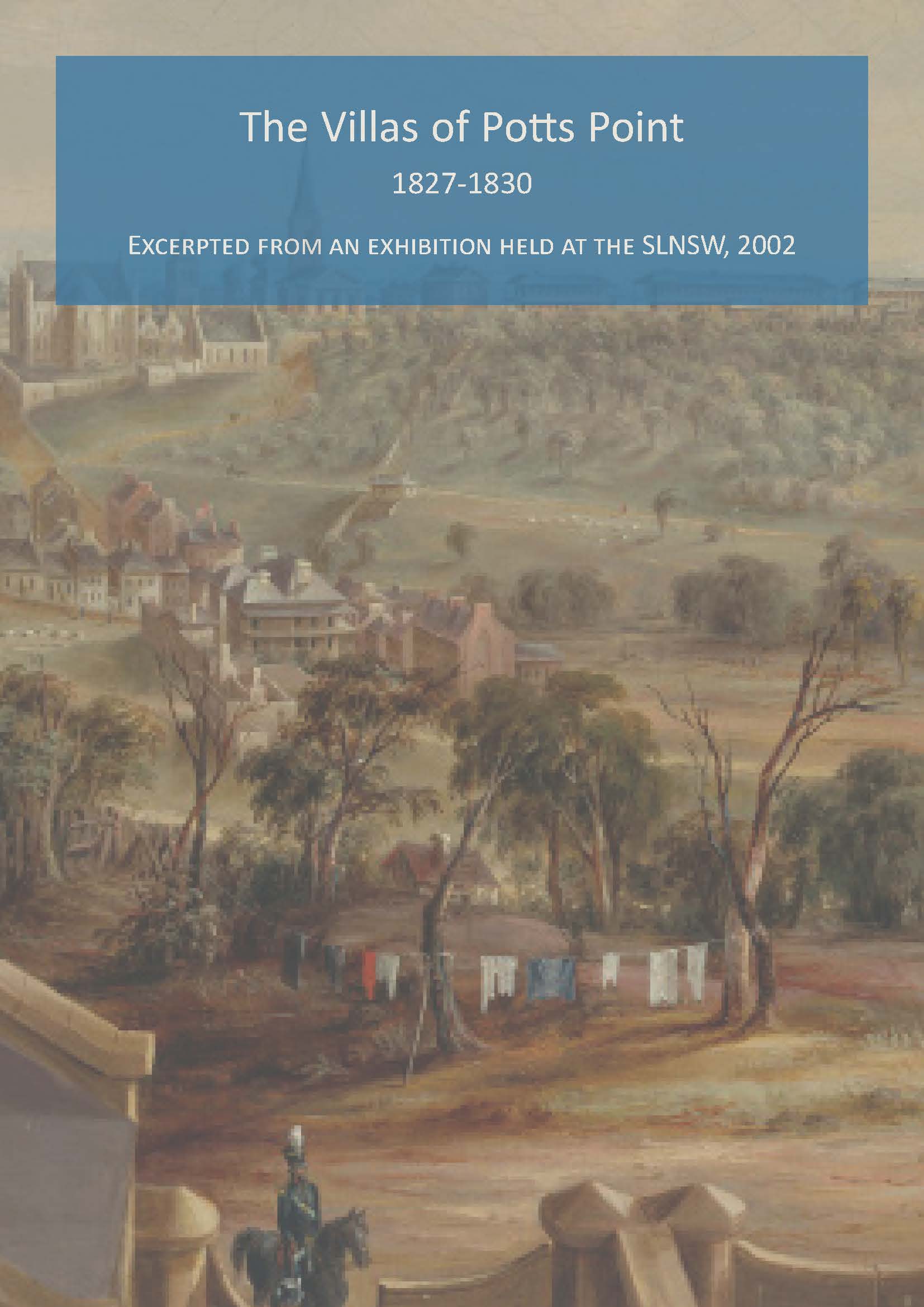
The Colonial Villas of Potts Point
(1827 – 1830)
Excerpted from an Exhibition at the State Library of New South Wales, 2002
Potts Point Preservation Group
Living History
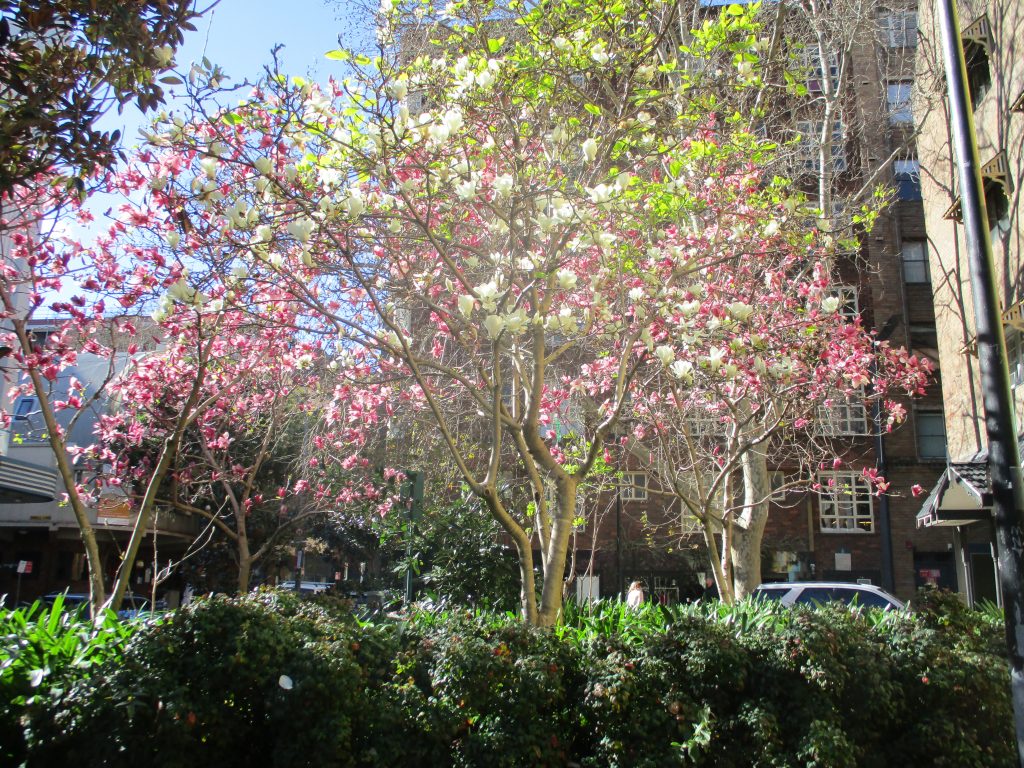
Magnolia Grandiflora
Potts Point and Elizabeth Bay have an embarrassment of riches when it comes to pocket parks and gardens.

Manar
Manar at 42 Macleay Street is both a grand mansion and a collection of three buildings in a prominent position in the heart of Potts Point.
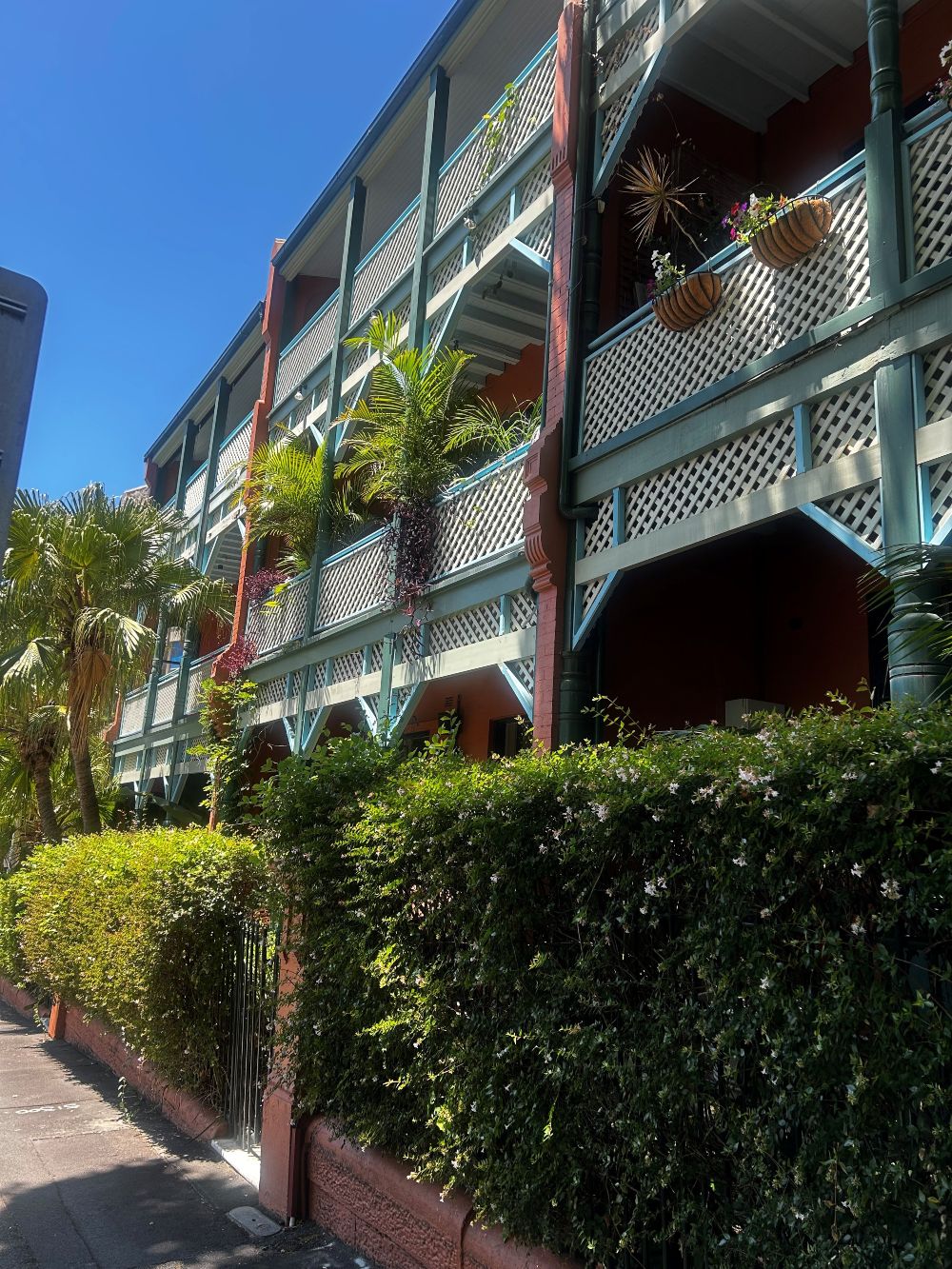
Victoria Street
Victoria street, named after Queen Victoria (1837-1901) is one of the most elegant streets in Sydney with its majestic London Plane trees, rows of terrace houses and occasional Art Deco apartments.

Mont Clair
Mont Clair is a delightfully stylish Art Deco seven-level apartment block built in 1938 at 347 Liverpool Street Darlinghurst.
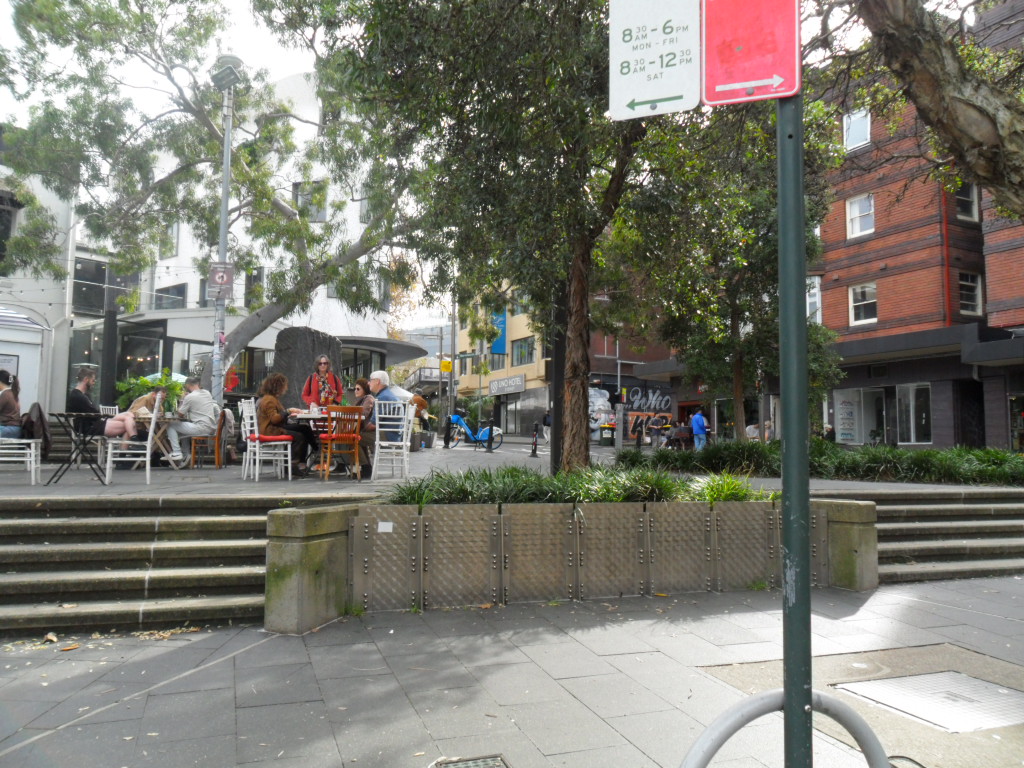
Roslyn Street Potts Point
Roslyn Street is buzzing with activity. It has a proud heritage dating back to the early nineteenth century and is part of Australia’s first suburb, Potts Point.
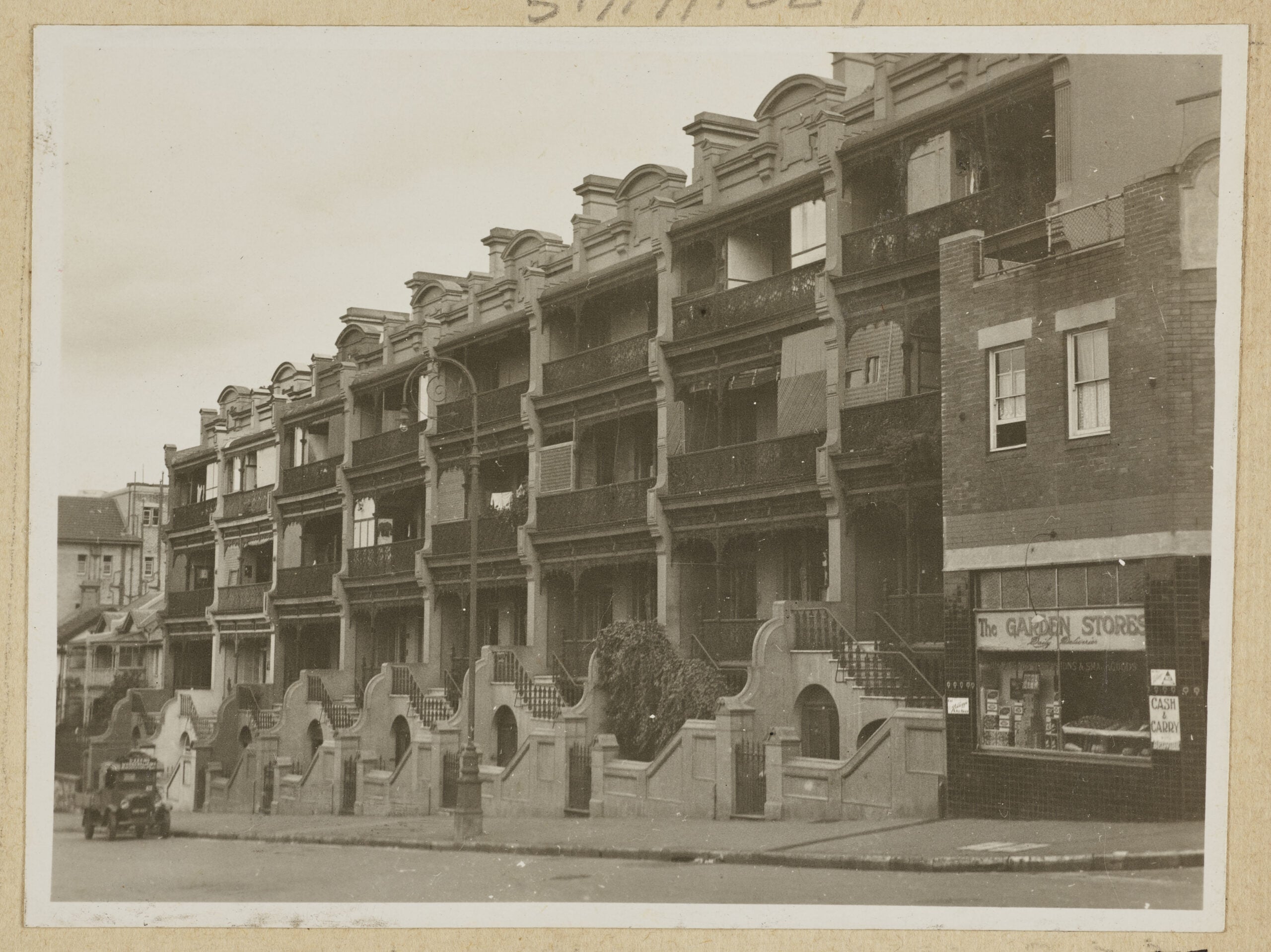
Rosyln Gardens
A suite of eight terraces in Roslyn Gardens, Elizabeth Bay, were built at the height of the late 1880s economic boom; an exuberant and prosperous period in Sydney’s history with money flowing freely.

San Jose
Kellet Street is a delightful little L-shaped street with its pretty, translucent Robinia street trees and terrace houses.
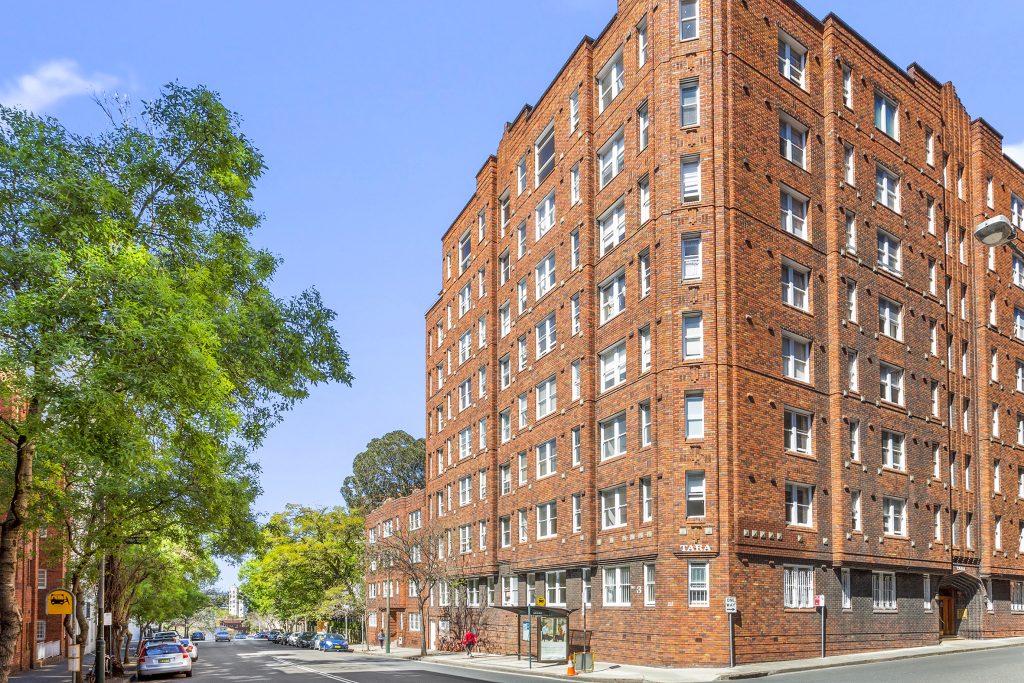
Tara
At Greenknowe Avenue the original project now known as Tara was lodged on 30th April 1941 and approved by council for construction on 21st May 1941.
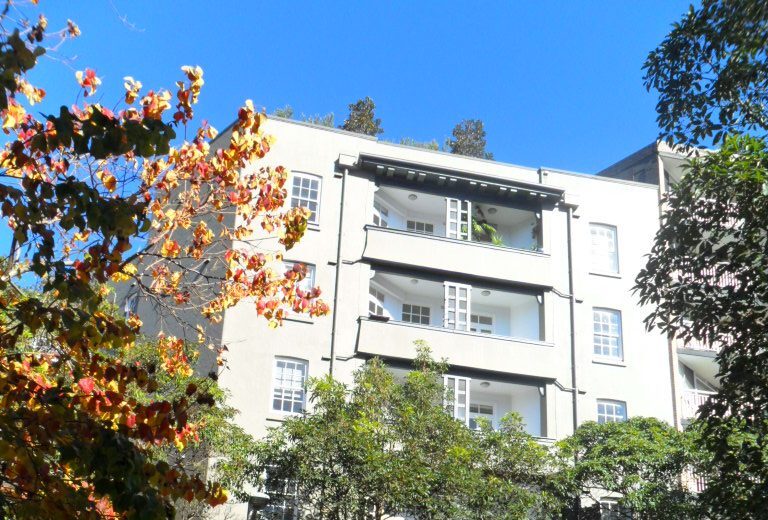
The Alexander
The Alexander apartments, Rushcutters Bay, sit surreptitiously at 67 Bayswater Road.
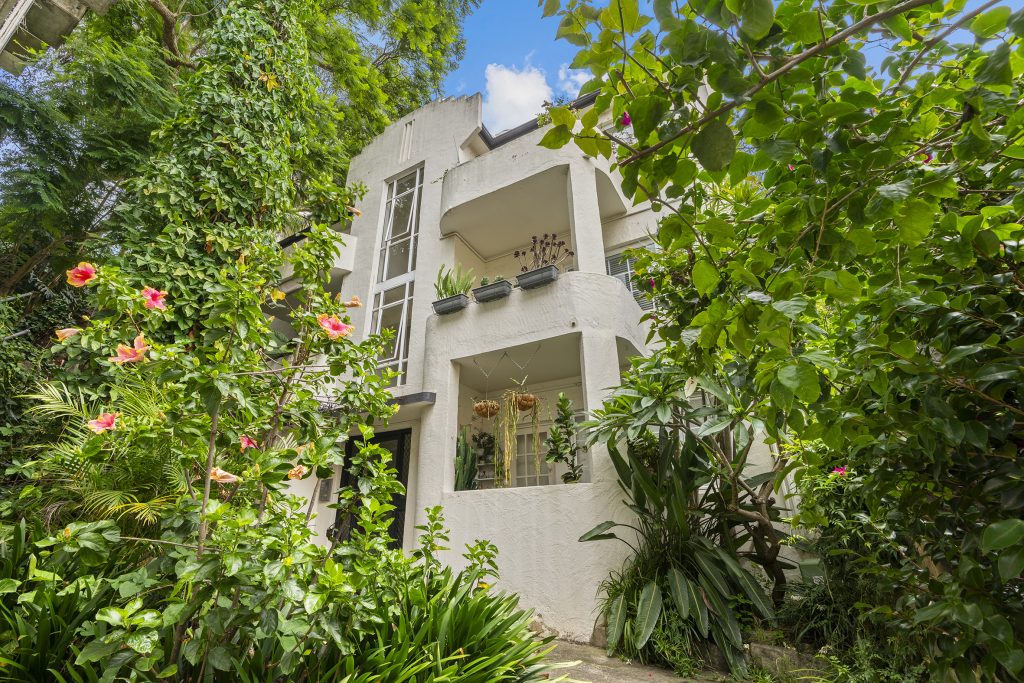
The Esplanade
Elizabeth Bay and Potts Point contains Australia’s finest collection of original Art Deco apartments. Some are grand, others are more petit almost surreptitious.
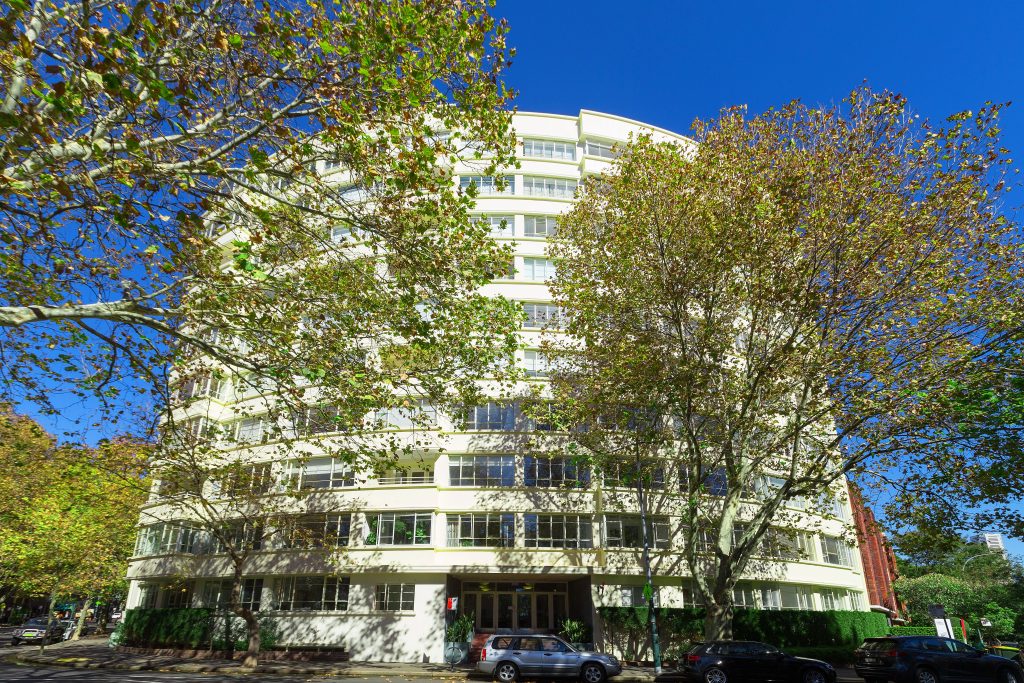
17 Wylde Street
People often flee from something or to something. So it was with Aaron Bolot (1900-1989), architect of 17 Wylde Street, whose Hebraic heritage meant his family fled from Crimea as a result of Russian persecution in 1911.
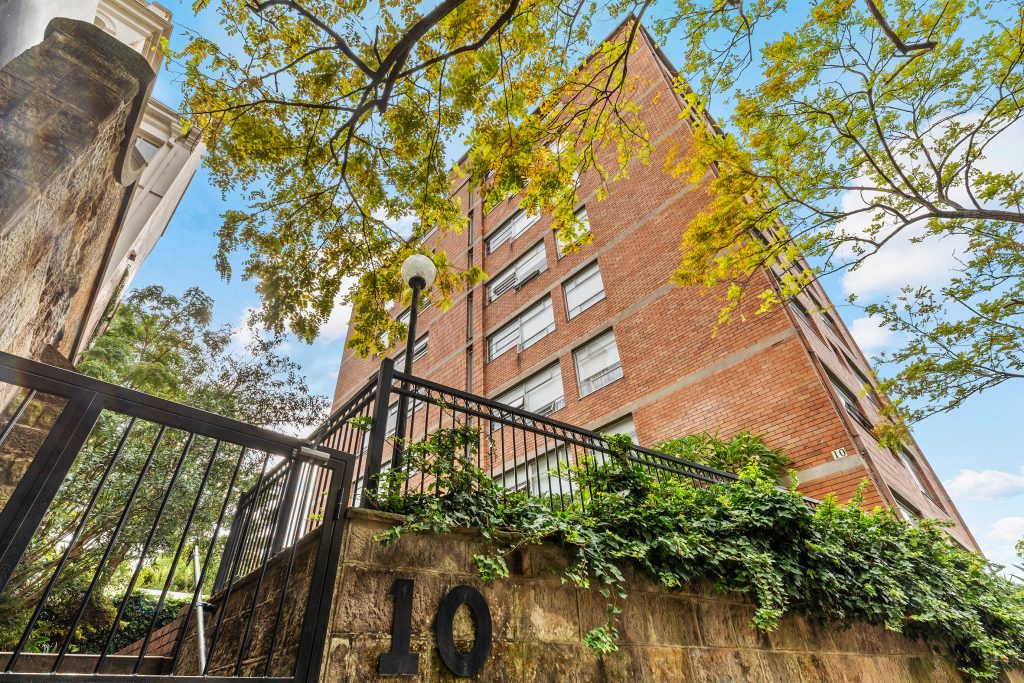
Barncleuth Square
10 Barncleuth Square is an interesting seven storey mid-century brick apartment block.
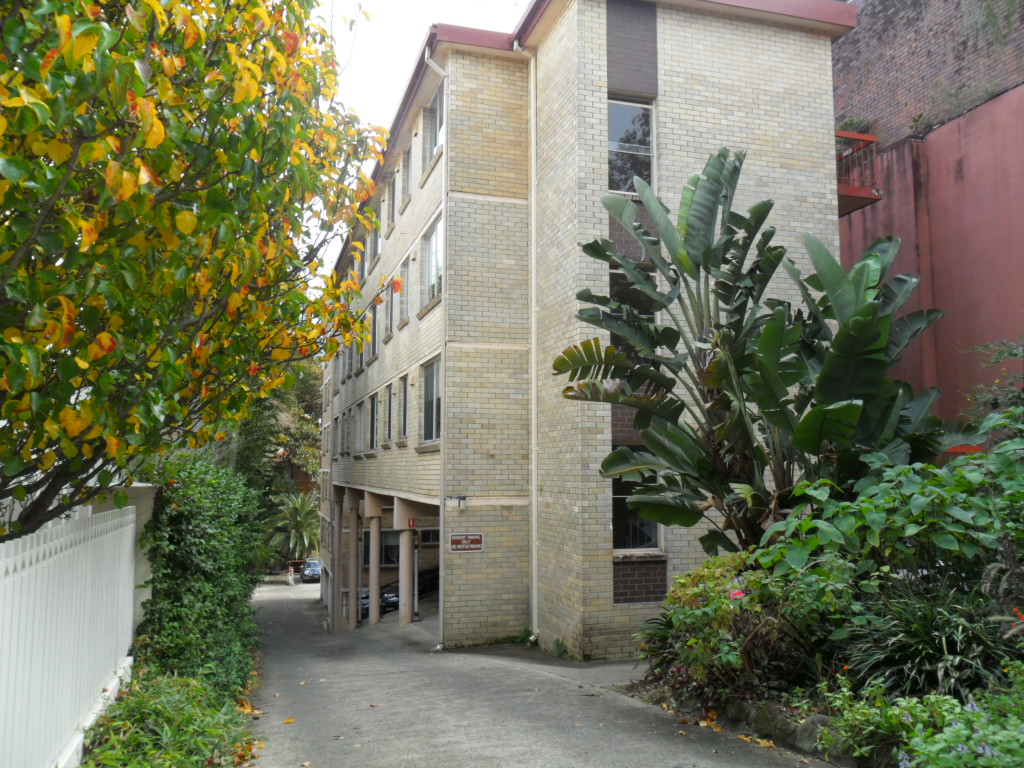
Brentwood gardens
Brentwood Gardens is an enigma. At first glance it appears as a single block of blond brick apartments.
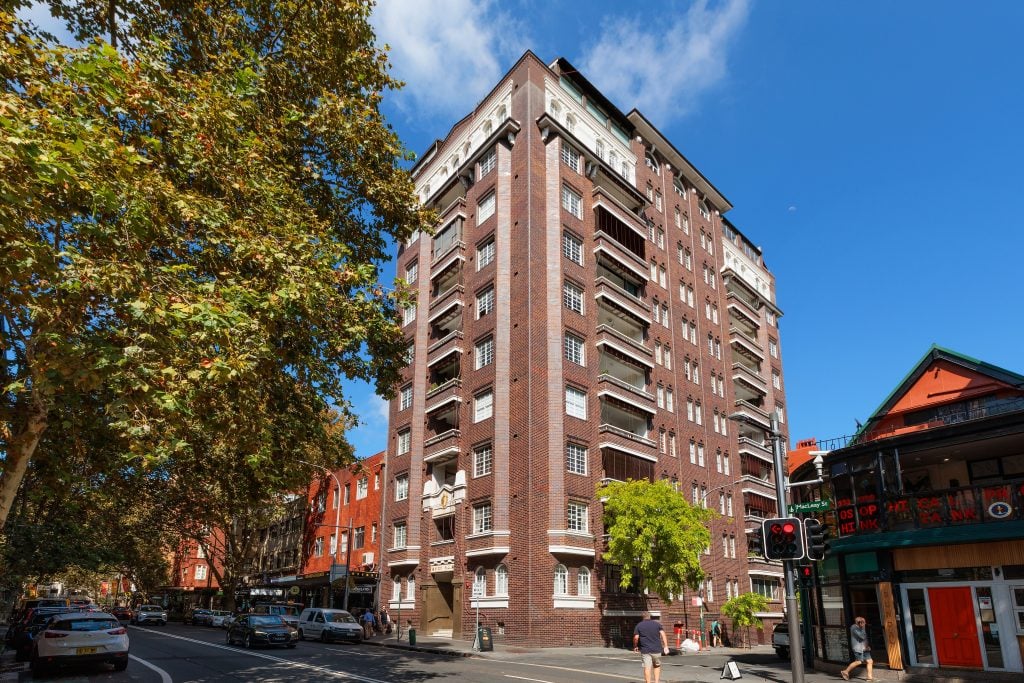
Byron Hall
Claud Hamilton, that’s Claud without an e, was a prolific early 20th century architect/developer. He designed Byron Hall Flats, 97-99 Macleay Street, Potts Point, in 1929 using the inter-war classical free style.
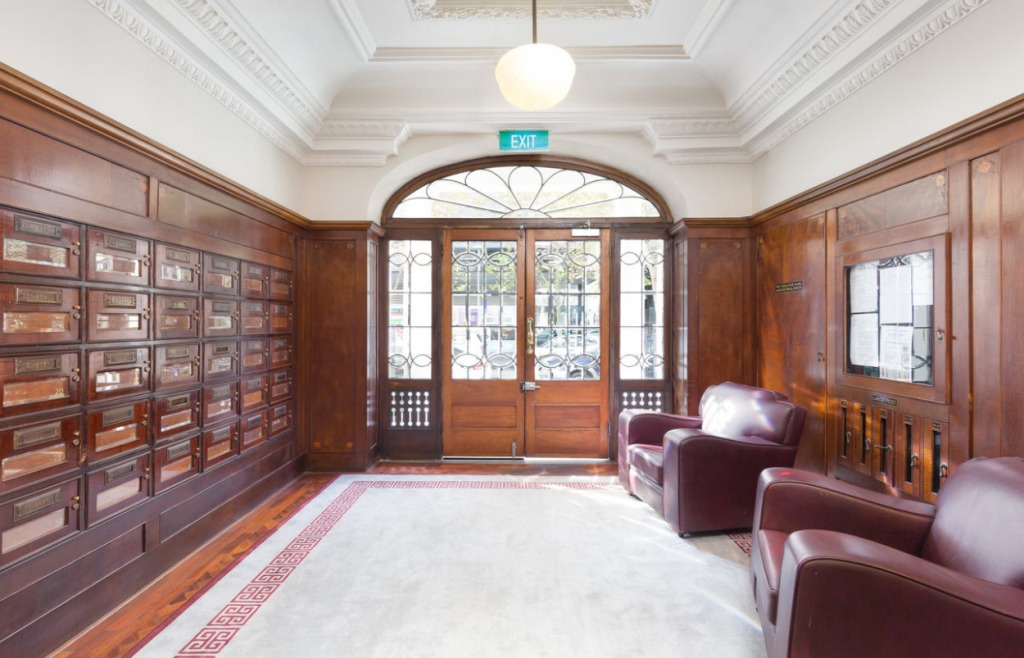
Carinthia
Carinthia is an elegant eleven-storey apartment building facing north-south at 7 Springfield Avenue, Potts Point, which also backs onto Earl Place.

Chatsbury
Chatsbury built 1938, is a delightfully different Art Deco block of apartments.

Elizabeth Bay House
Alexander Macleay arrived in Sydney from London in 1826. With him came his large collection of flora and six unmarried daughters.
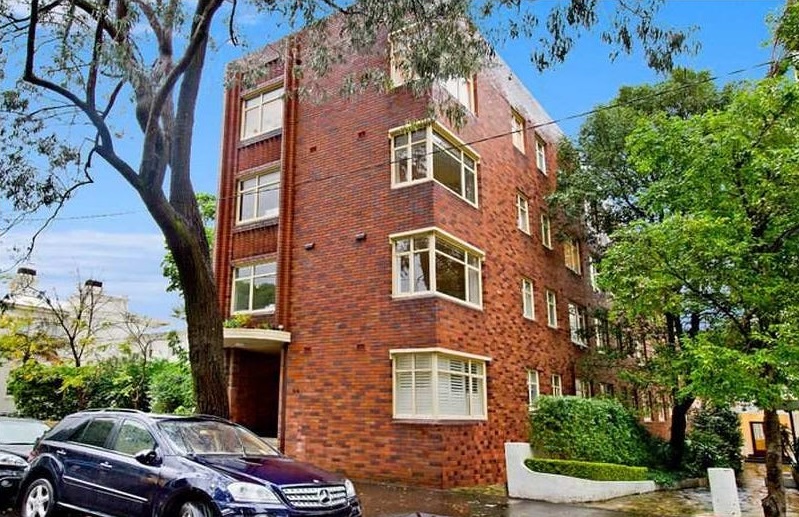
Eurambie Hall
Eurambie Hall, 94 Elizabeth Bay Road, Elizabeth Bay, is part of the streetscape known to locals as the Elizabeth Bay Loop, a road which curves back on itself, looping itself around the Macleay Reserve.

Four Macleay Street
Four Macleay Street is hinged on the history of the area. It is one of the first Art Deco or Style Moderne apartment blocks built in Macleay Street.
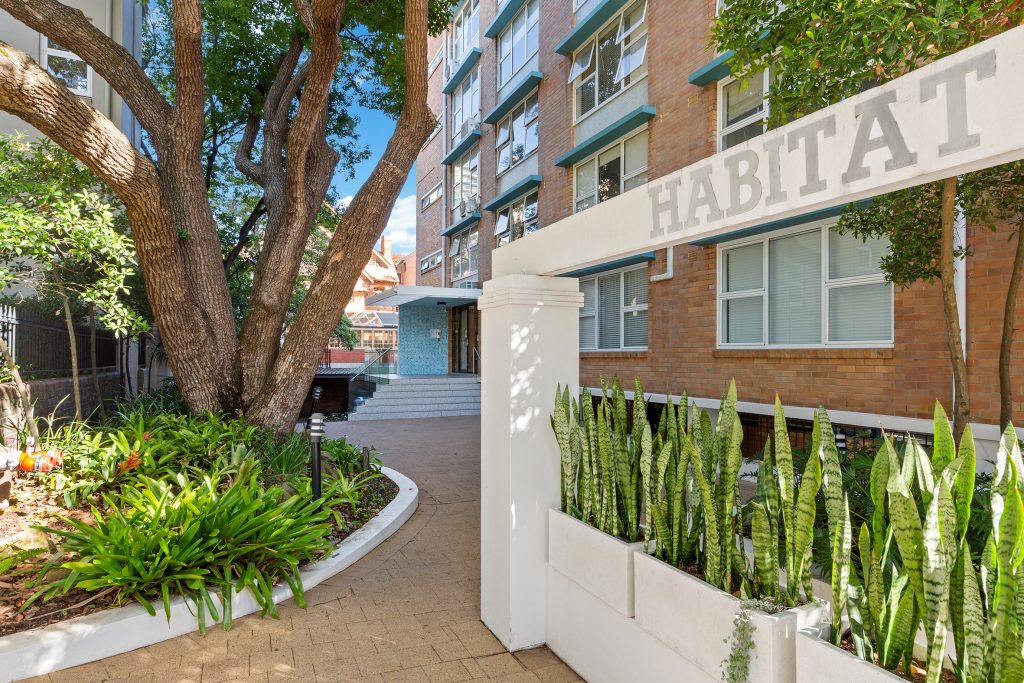
Habitat
Habitat apartments, 1 McDonald Street, Potts Point, is a seven-storey building built in 1964.
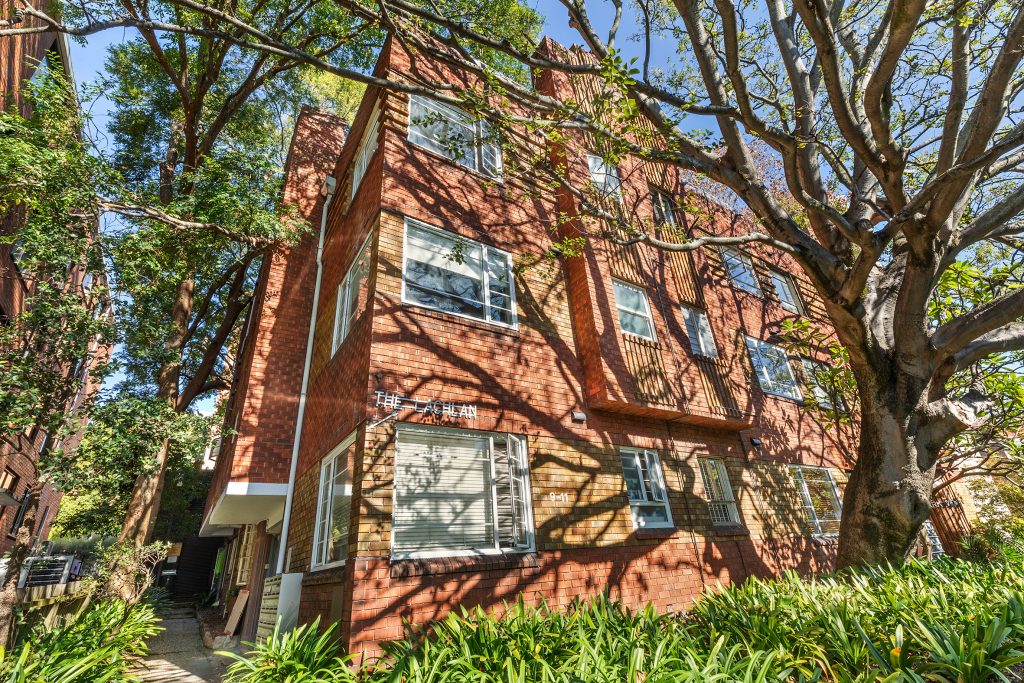
Lachlan Apartments
The Lachlan Art Deco apartments at 9 St Neot Avenue is almost hidden in its streetscape. It is nestled behind a large fig tree which provides a graceful and generous umbrella of mottled shade even in the height of the Sydney summer sun.
Information by courtesy of Jason Boon, Director R&W Elizabeth Bay/Potts Point