
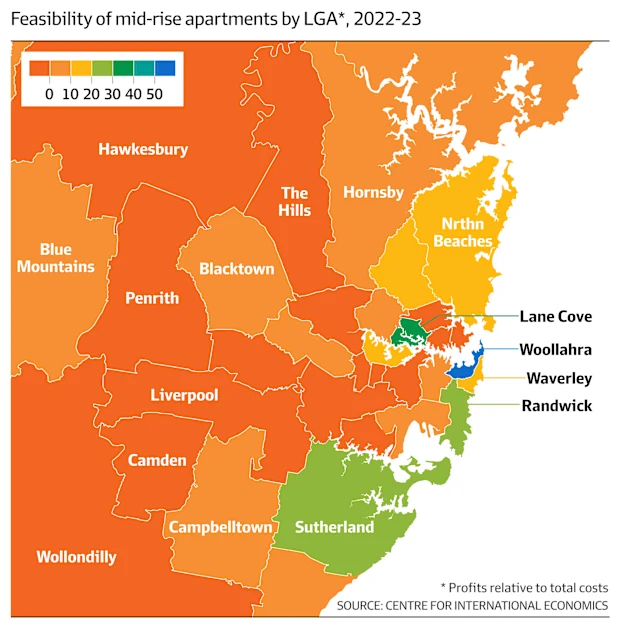
Woollahra in Sydney’s east is the most feasible place to build new apartments in the city because profit on each unit is about $1.2 million, according to research the NSW Labor government used to back its plans to triple density in the suburb.
The Centre for International Economics advised NSW Treasury in August 2024 the average apartment in Woollahra sold for $3 million, making the gap between the cost of building a unit and its sale price the widest in Sydney.
This was true even after CIE revised downwards a key element it used to calculate the so-called “feasibility gap” per apartment in Woollahra after AFR Weekend sought clarification on the numbers.
The centre’s original report claimed Woollahra apartments had an average construction cost of $1.6 million and a positive “feasibility gap” of 90 per cent. That would mean an apartment sale generates a profit of $1.4 million in excess of the standard 18 per cent developer profit ($288,000) factored in as a cost of construction.
But when contacted on Thursday with questions about the report, CIE director Dennis McCarthy revealed that an error in the land value assumption had been made.
CIE corrected the error, telling NSW Treasury that in fact Woollahra apartments cost on average $1.8 million to build and generate $1.2 million of profit.
“The finding is unchanged that Woollahra has the highest feasibility gap by a significant margin,” McCarthy said.
The report found that across Sydney it costs on average $905,000 to build apartments set to sell for only $885,000. This negative 2 per cent feasibility gap requires developers to slash profits from the typical 18 per cent to 16 per cent or apartments will go unbuilt.
Suburbs with positive feasibility to build included Lane Cove, Hunters Hill, Randwick, the Northern Beaches and Waverley, all with an average sale price of $1 million–$2 million per apartment.
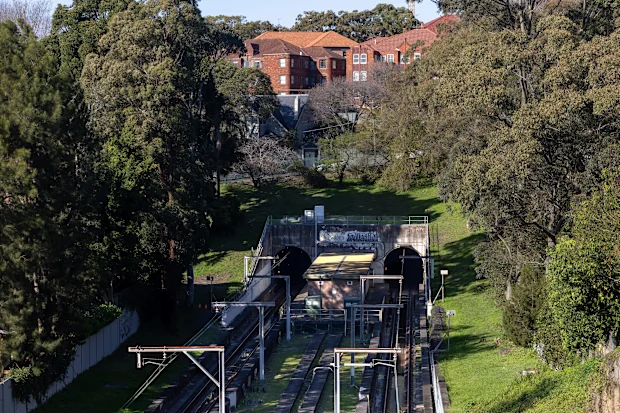
In August 2025 the Minns Labor government announced it would triple the density of Edgecliff and Woollahra in Sydney’s inner east, with 10,000 new homes slated for the area after construction of Woollahra station on the eastern suburbs line and an associated rezoning.
The project got notional support from the Coalition opposition including new Liberal leader Kellie Sloane, but is opposed by the local council dominated by Liberals.
Liberal Mayor of Woollahra Sarah Dixson seized on the report as vindication of her council’s concern that more affordable older buildings will be replaced with luxury apartments.
“The current walk-up apartments that actually provide comparatively affordable housing in the Woollahra local government area, for both purchase and rent, will disappear,” Dixson said. “The Minns government is doing all it can to empower developers to push their profits even further off the charts in the pursuit of displacing affordability for luxury.”
Deputy Mayor Sean Carmichael said: “While I have an economics degree, you don’t need one to understand that you won’t solve the nation’s housing crisis in Woollahra if the only feasible development is rows and rows of luxury apartments.”
Carmichael, who previously argued the rezoning constitutes “toxic masculinity”, said Labor had “walked over our community and decided to lock us out” of decision-making.
Carmichael noted Labor had refused to increase density in Woolloomooloo, an inner east suburb with more public housing, despite it having a similar profile for feasibility to build.
“But when it comes to Paddington and Woollahra, they seem to get so excited by the idea of decimating the area in the name of progress. So some heritage indeed remains sacred, and above economics, but only if it suits the Labor narrative.”
NSW is struggling to build 377,000 homes by 2030, its share of the ambitious 1.2 million national target, despite a suite of urban infill policies and a pre-sale finance guarantee designed to give developers the confidence to build apartments.
Planning Minister Paul Scully said Woollahra was “just one of 68 state-led rezonings happening around NSW which will unlock more than 236,000 homes and 167,000 jobs”.
“NSW’s housing approvals, commencements and completions are all increasing,” he told AFR Weekend.
“The Minns Labor government is rebalancing Sydney’s housing growth to make sure all parts of Sydney contribute to new housing supply, and new housing is built alongside existing and new infrastructure like Woollahra train station.”
Under the government’s infill affordable housing scheme, developers are eligible for an extra 20–30 per cent of floor space and height if they include at least 10–15 per cent affordable housing. Scully said the scheme had delivered in 24,800 homes including an extra 5300 affordable homes.
“The [Woollahra] rezoning will consider the most suitable approach to the inclusion of affordable housing,” he said.